
ThriftFlip Resell Tycoon Clean and Sell Workflow
Protect every thrift and garage find with a cleaning-first pipeline that sells for full value.
The middle of the empire loop
Official fantasy copy for Thrift&Flip: Resell Tycoon is blunt: find it, clean it, sell it. Cleaning is not optional flavor — it is the bridge between a thrift rack (or storage garage) and real profit. Players who skip cleaning to “save time” usually donate margins to the void.
This page is the operational workflow: haul discipline, cleaning order, listing / selling choices, store handoff, and quality control. Use it with Make Money for pricing context and Build Store for retail placement.
Standard pipeline
- Source — thrift store racks or garage contents.
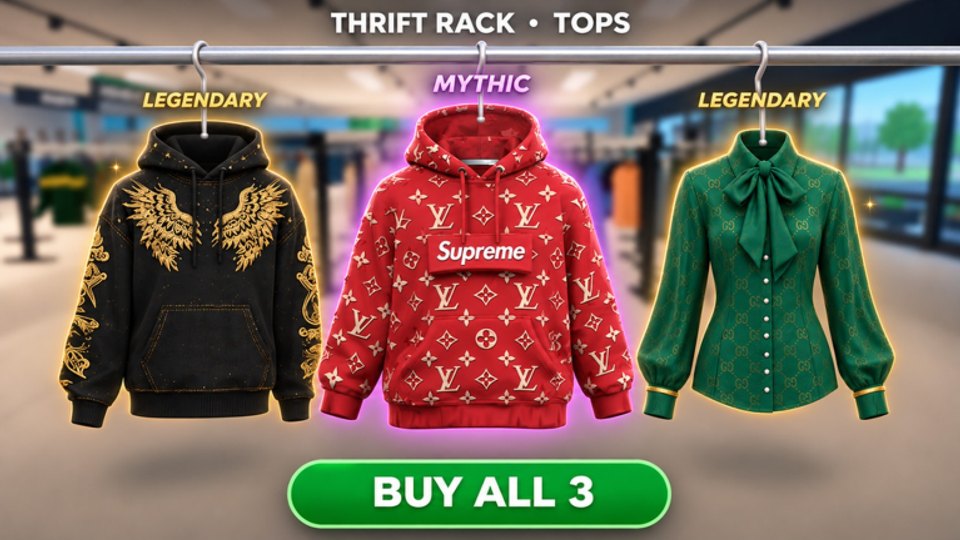
- Bag check — note rarity signals up to MYTHIC and whether the category matches market trends.
- Transport to cleaning — do not list from a dirty state.
- Clean — finish the cleaning interaction fully; interrupted cleans are how mistakes happen.
- Inventory audit — decide quick sale vs store display vs short hold.
- Sell or stock — complete the listing / sale flow or place on a display.
- Reinvest — return to sourcing with refreshed Cash.
Print that loop into muscle memory. Speed comes from fewer decisions, not from skipping steps.
Haul discipline before you clean
A clean queue works best when the haul was intentional:
- Bias picks toward on-trend categories (Best Flips)
- Avoid filling every slot with cold commons unless you need absolute beginner practice
- On full 10-player servers, secure items first, then clean — standing AFK on a contested rack helps rivals
If you redeemed Resell2000 or another code, spend the Cash on hauls you are willing to clean the same session.
Cleaning priority order
When the queue is long, clean in this order:
- Highest rarity (Mythic → lower)
- On-trend categories at equal rarity
- Items destined for hero store displays
- Bulk fillers last
This order realizes value fastest if you get interrupted by a garage auction or a friend needing help.
Selling channels
Direct / quick sales
Best for early Cash velocity and for offloading duplicates. Price fairly, especially on cold trends. The goal is liquidity to fund the next hunt or bid.
Store displays
Best for building passive sales and showcasing cleaned rarities. Only place cleaned items. Group categories and keep aisles clear so customers can browse.
Holds
Short holds make sense when a trend is about to swing or when a display slot is reserved for a matching set. Long holds of dirty items are never correct — clean first, then hold.
Quality bar before you list
Ask:
- Is cleaning fully done?
- Does pricing respect current trends?
- Am I listing this to free Cash or to seed the store?
- If this is a Mythic, does it deserve hero placement instead of a rushed dump sale?
If you cannot answer, pause. One mindful listing beats five panicked ones.
Sync with Gems and NPCs
NPC trading earns Gems. Between clean batches, slot an NPC trade so Gem progress moves without abandoning the Cash loop. Do not let Gem grinding replace cleaning — empty dirty inventory helps neither currency.
Batching for efficiency
Small batch (beginner): 3–5 items → clean all → sell/stock all → hunt again.
Medium batch (grinder): fill a comfortable inventory block → clean by priority → split store vs quick sale → hunt.
Garage batch: triage first (see Storage Garages), then clean; never treat a whole unit as one undifferentiated pile.
Batching reduces travel waste across the map.
Team roles
In co-op, assign a cleaner and a hunter. The cleaner lives at the cleaning / listing stations; the hunter keeps bringing sorted bags. A third teammate can tend the store. Agree on who owns Mythic placement rights to avoid arguments. Playstyle framing: Playstyles.
Mistakes that quietly delete profit
- Listing dirty stock
- Cleaning low commons first while a Mythic sits filthy
- Leaving cleaned items unsorted in inventory until you forget trends
- Pricing every item identically regardless of rarity or market
- Building store expansions instead of finishing the clean queue
- AFK in the cleaning spot on a crowded server
Mini checklist (every haul)
- Haul aligns with trends or justified rarity chase
- Cleaning finished for each item you plan to monetize
- Destinations decided (sell / store / hold)
- Cash impact understood before the next thrift spend
- Store hero slots updated if a high rarity was cleaned
How this page ties to the rest of the wiki
- New players: start at Getting Started, then return here until the pipeline is boring.
- Profit tuners: Make Money.
- Rarity hunters: Item Rarity.
- HUD confusion: Controls.
- Patch changes to cleaning or fees: Updates.
Practice drill
Run three consecutive hauls where you refuse to start the next hunt until every item from the previous haul is cleaned and assigned. That single drill fixes most beginner leaks.
Master cleaning and selling, and every other system — garages, stores, workers — gets cheaper and safer to operate.
Frequently Asked Questions
Quick answers for thrift flips, codes, and store growth.
Can I sell items without cleaning them?
You should not. Cleaning is a core step in the official loop and protects resale value. Make clean-before-list a hard rule.
What should I clean first in a big haul?
Highest rarity first, then on-trend categories, then hero store pieces, then bulk fillers.
Should cleaned items always go to the store?
No. Use quick sales for Cash velocity and duplicates; reserve strong cleaned pieces for displays when you are building retail income.
How do trends affect selling?
On-trend cleaned items can be priced more confidently. Off-trend pieces may need fairer prices or secondary placement for faster turns.
Does cleaning matter for garage finds too?
Yes. Garage hauls follow the same clean-then-sell pipeline after triage.